The Hidden Reasons Women Are More at Risk for Eye Disease | Women's Eye Health

Updated: Apr 23
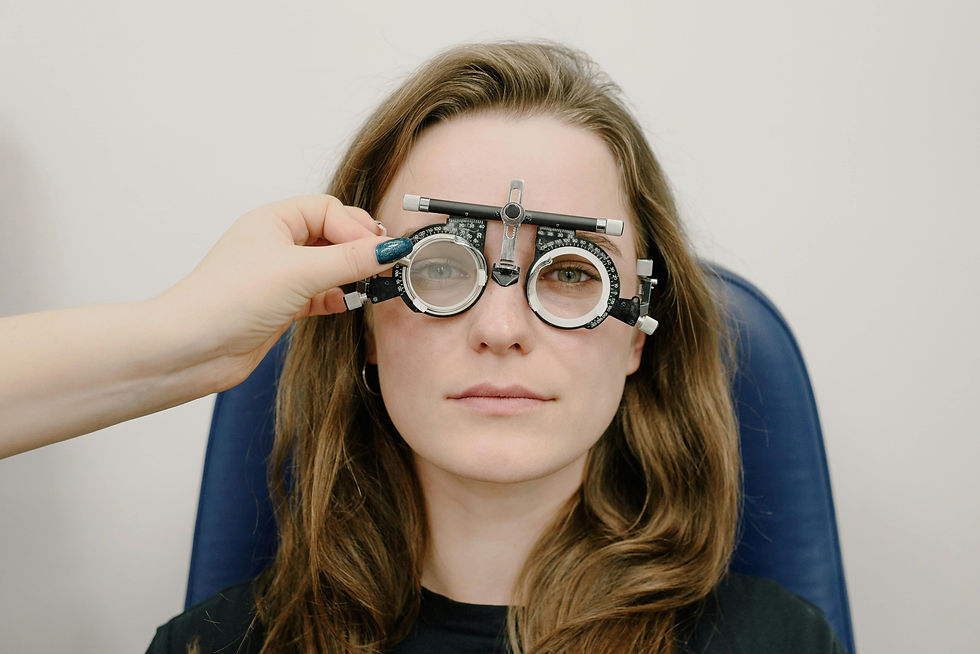
April is Women’s Eye Health and Safety Month, but the factors that influence women’s eye health go far beyond a single awareness campaign.
Throughout this series, we’ve explored how vision changes over time and how hormonal shifts, especially during menopause, can affect the eyes. But there is a bigger picture.
Women are more likely to experience certain eye conditions and vision loss, and the reasons are more complex than most people realize. It is not just about aging. It is about how hormones, inflammation, and overall health interact over time, often in ways that are easy to overlook.
Women’s Eye Health: Why the Risk Is Higher
Women experience higher rates of several eye diseases and vision-related conditions. While longer life expectancy plays a role, it is only part of the picture.
There are deeper, less visible factors that contribute to this increased risk.
Hormones, Inflammation, and the Eye
Hormones influence more than reproduction. They play a critical role in how the eyes function and respond to stress.
As estrogen and androgen levels change, especially during menopause:
Tear production becomes less stable
The protective tear film breaks down more easily
Inflammation on the eye surface increases
Over time, this can lead to chronic dry eye, irritation, and fluctuating vision.
This is why many women notice changes that feel sudden, even though they have been developing gradually. These symptoms often become more noticeable during menopause, when hormonal shifts have a more significant impact on the eyes. (Learn more about menopause and eye health.)
The Link Between Autoimmune Conditions and Vision
Autoimmune conditions are significantly more common in women, and many of them directly affect the eyes.
Conditions such as:
Thyroid eye disease
Sjögren’s syndrome
Rheumatoid arthritis
can lead to:
Severe dry eye
Inflammation
Changes in vision or eye appearance
In some cases, eye symptoms are one of the first noticeable signs of an underlying condition.
The Silent Progression of Eye Disease
One of the biggest challenges in women’s eye health is that many conditions develop without obvious symptoms.
Diseases such as glaucoma and macular degeneration can progress quietly, often without noticeable vision loss in the early stages.
By the time symptoms appear, changes may already be advanced. This is why regular eye exams are critical, even when your vision feels normal. Understanding how your eyes change over time can help you recognize these risks earlier. (Explore how women’s eye health evolves at every stage of life.)
Why Women Often Delay Eye Care
Beyond biology, behaviour and lifestyle also play a role in women’s eye health.
For many women, eye care simply doesn’t feel urgent. Vision changes are often subtle at first. Dryness, fatigue, or occasional blur can be easy to dismiss, especially when life is busy.
Many women find themselves:
Putting their own health behind family or work responsibilities
Assuming symptoms like dryness, irritation, or tired eyes are just part of aging
Adapting to changes instead of addressing them
Waiting until vision is clearly affected before seeking care
Over time, what starts as a minor inconvenience can become something more persistent and more complex. The challenge is that many eye conditions develop quietly. By the time symptoms feel significant, they may already be more advanced.
How Eye Health Reflects Overall Health
Your eyes are often described as a window to your overall health, and that connection is more meaningful than most people realize. They are one of the few places in the body where blood vessels and nerves can be viewed directly, allowing subtle changes in health to be detected earlier than many people expect.
Changes in vision or eye comfort can be linked to:
Hormonal shifts
Chronic inflammation
Autoimmune disease
Metabolic conditions such as diabetes
A comprehensive eye exam offers more than clarity of vision. It provides valuable insight into your overall health, sometimes before other symptoms become noticeable.
What You Can Do to Protect Your Vision
Protecting your vision starts with awareness, but it requires action.
Key steps include:
Scheduling regular comprehensive eye exams
Paying attention to subtle changes in comfort or clarity
Understanding your personal and family health history
Addressing symptoms early rather than waiting
Early detection can make a meaningful difference in long-term outcomes.
A More Informed Approach to Women’s Eye Health
Women’s eye health is influenced by a combination of biological, hormonal, and lifestyle factors.
The more you understand these connections, the better equipped you are to protect your vision over time.
Your vision is worth protecting at every stage of life.
Whether you’re noticing changes or simply staying proactive,
understanding your risk is the first step.
Book a comprehensive eye exam in North Vancouver and take a proactive approach to your long-term eye health.



Comments