How Your Eyes Could Be Causing Your Migraines — And Whether Glasses Can Help

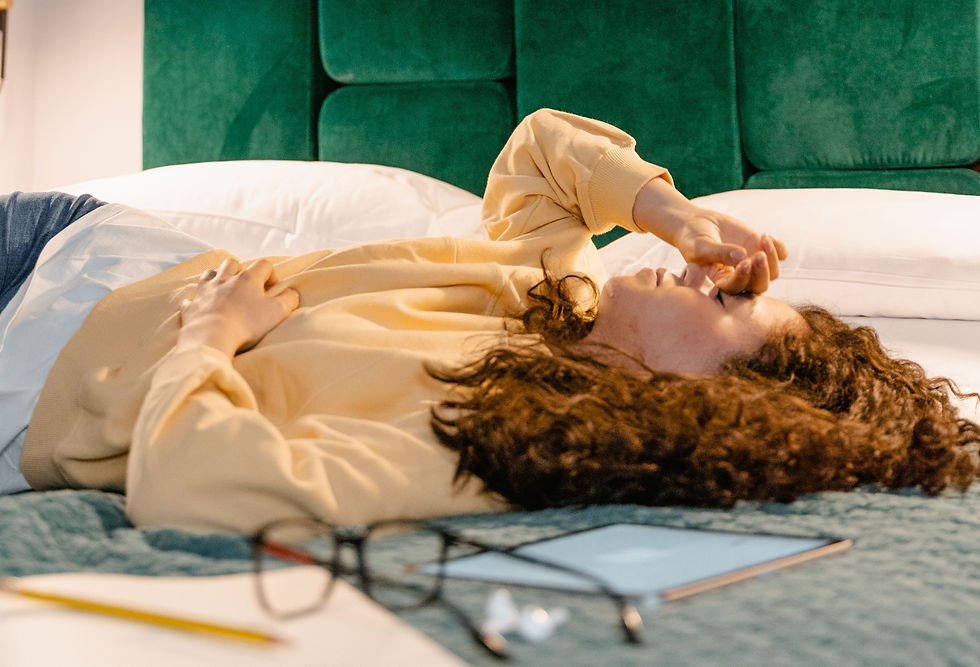
June is Migraine and Headache Awareness Month. If you live with chronic headaches, you've probably tried a lot of things — and one question worth asking is whether glasses can help with your migraines or headaches in a way that hasn't been explored yet.
This isn't about replacing treatments that already work for you. It's about something that comes up a lot in optometry: people who've been managing headaches for years, sometimes with medication, sometimes just pushing through, who find real relief once a vision issue gets identified. There are two main ways the visual system can drive headaches, and both are more common than most people realize.
Why Light Makes Migraines Worse — And How Glasses Can Help
If you have migraines, you already know that light is one of the worst parts. Fluorescent lights, screens, bright sunshine — for a lot of people these aren't just uncomfortable, they're genuine triggers. Around 90% of migraine sufferers deal with light sensitivity, and for many it becomes one of the most limiting parts of daily life.
What's happening is that certain wavelengths of light — particularly in the blue-green range — activate a nerve pathway that feeds directly into where migraine pain is generated. It's why a dark room helps, and why so many people end up wearing sunglasses indoors.
The problem with sunglasses indoors, though, is that they can actually make things worse over time. Your eyes adapt to the darkness and become even more sensitive when you go back into normal light. It can feel like relief in the moment while quietly making the sensitivity worse.
What are FL-41 lenses — and why do migraine sufferers keep talking about them?
FL-41 is a rose or amber tint developed specifically for people with light sensitivity. It targets the wavelengths of light most likely to trigger a migraine, rather than just darkening everything the way sunglasses do.
Unlike dark sunglasses, FL-41 lenses are designed for everyday use, indoors and out. They filter the problematic light without making your environment too dark, which means your eyes don't go through that sensitivity cycle.
The research behind FL-41 goes back to the early 1990s, when studies first showed that children with migraines who wore these lenses had fewer and less severe headaches. The evidence has kept building since — it's now used for migraine, blepharospasm, and post-concussion light sensitivity. Studies from the University of Utah and others have backed it up as a legitimate non-medication option for people with chronic light sensitivity.
The difference between buying FL-41 glasses online and getting them through an optometrist is that your lenses can include your actual prescription, and the tint can be matched to what your eyes specifically need. Not everyone responds the same way to the same filter, and having someone assess that makes a difference.
There's Another Reason Your Eyes Could Be Causing Headaches
This one surprises people. A lot of chronic headaches — especially the kind that build throughout the day, get worse with screen time or reading, and come with neck tension or tired eyes — aren't caused by light at all. They're caused by how the eyes work together.
Most people's eyes have a small amount of misalignment. Usually the brain compensates for it without any problem. But when the misalignment is significant enough, the eye muscles have to work constantly to keep things fused into a single image. That effort adds up. By end of day, it's translated into a headache, neck tightness, and that drained feeling behind the eyes.
The reason this often goes undetected is that it doesn't always show up as a vision problem. People can have perfectly good eyesight — 20/20, no blur — and still have this happening. Standard vision tests don't always catch it. The right questions and the right measurements need to happen.
What Are Neurolenses and Can They Stop Headaches?
Neurolenses are prescription lenses designed specifically for this type of misalignment. They use what's called a contoured prism — a prism that gently shifts from the distance part of the lens to the near part, matching the way most people's misalignment actually works (it's usually more pronounced up close than at distance).
A regular prism lens corrects at one fixed distance. Neurolenses correct across the full range, which is what makes them different from just adding a standard prism to a prescription.
The evidence behind them is real. In a large clinical trial, people with long-standing headaches wore Neurolenses for several weeks. Around half of them reported that their headaches were basically gone or substantially reduced — a result that held up when compared to what common migraine medications produce in their own studies. A separate study looking at nearly 100,000 patients found significant improvements in both headache scores and neck and shoulder pain.
The assessment takes a few minutes and uses a specialized device that measures your eye alignment precisely at both near and distance. From there, an optometrist can tell you whether you're a candidate and what to expect.
How do you know which one applies to you?
Sometimes both do. Light sensitivity and eye misalignment can coexist, and they can both be addressed — often in the same pair of glasses.
As a rough guide:
If your headaches reliably get worse in bright environments, near screens, or under fluorescent lights, light sensitivity is likely a factor worth looking into.
If your headaches build throughout the day and track closely with reading or screen time — and especially if you also get neck tension or eye fatigue — eye alignment is worth investigating.
If you've had a concussion and are still dealing with headaches and light sensitivity, both are relevant.
The starting point is an eye exam where you actually talk through your headache history. These things don't come up automatically in a standard exam — the conversation has to happen.
Headache Relief Starts With the Right Exam
If you've been living with headaches and haven't looked at the visual side of things, we can help figure out whether it's relevant for you.
We can assess light sensitivity and eye alignment, discuss whether FL-41 tinted lenses or Neurolenses might help, and fit prescription lenses that address both your vision correction and these issues at the same time.
Migraine and Headache Awareness Month is a good reason to book if you've been putting it off.
Book an appointment → | Call us at (604) 987-9191
Know someone who deals with chronic headaches or sensitivity to light? This is worth passing along — especially if they've been searching for answers for a while.


Comments